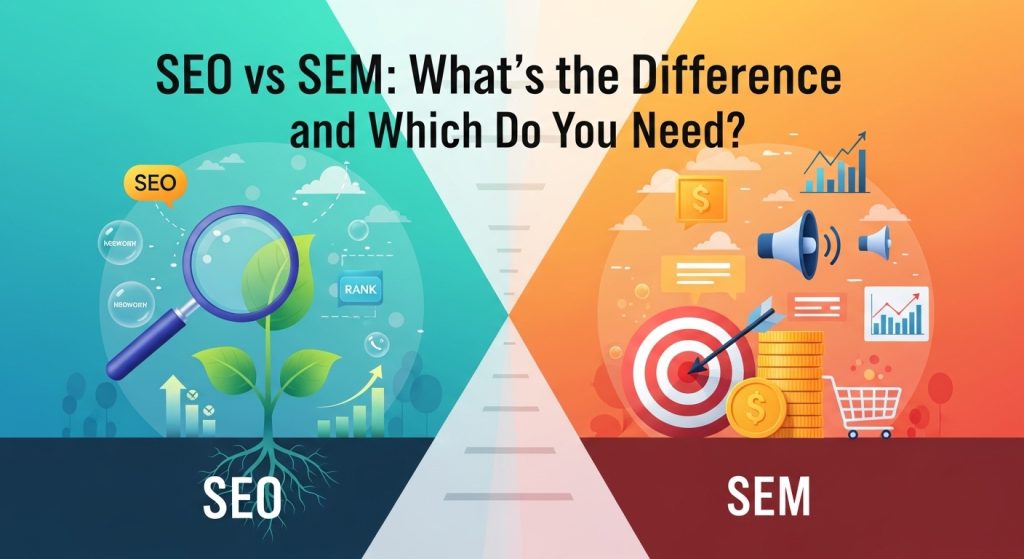
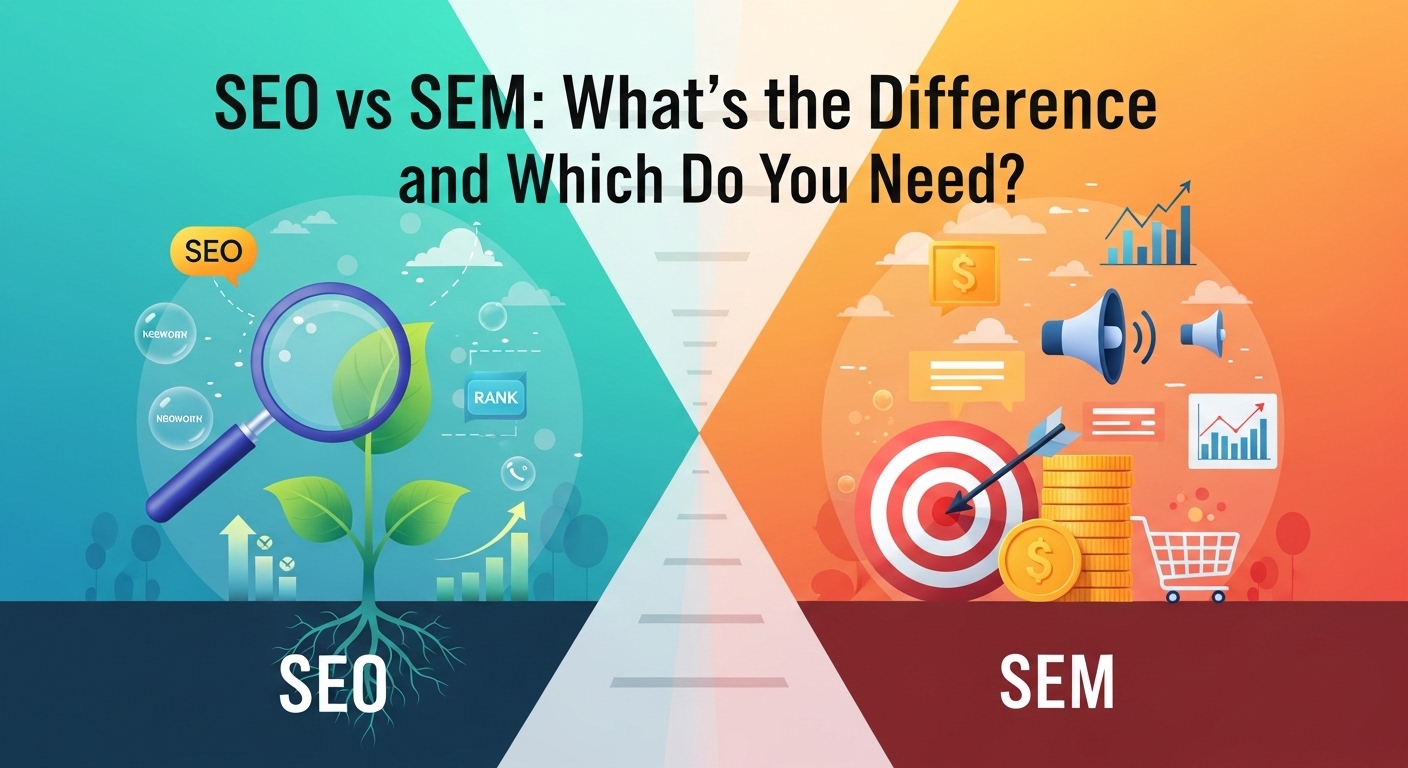
Most business owners have heard both terms, SEO and SEM. Sometimes people use them as if they mean the same thing, but they do not. Choosing the wrong one, or putting all your budget into one while ignoring the other, is one of the most common mistakes businesses make with their digital marketing spend.
What Is SEO and How Does It Work
SEO, or Search Engine Optimization, is the process of improving your website so it shows up in organic search results. Organic means you are not paying Google to place you there. You earn that position through content, technical setup, backlinks, and relevance to what people search for.
When someone types “best commercial cleaning company in San Diego” and your website appears on page one without a paid tag next to it, that is SEO at work.
What SEO Covers
- On-page optimization: title tags, headers, content structure, keyword placement
- Technical SEO: site speed, mobile performance, crawlability, indexing
- Off-page SEO: backlinks, citations, and brand mentions from other websites
- Local SEO: Google Business Profile, local citations, location-based keyword targeting
According to BrightEdge research, organic search drives 53% of all website traffic, which makes it the largest single channel for most businesses.
Working with an SEO company that understands your industry and market gives you a foundation that keeps generating traffic over time, not just while you are paying for clicks.
What Is SEM and How Is It Different
Search Engine Marketing, or SEM, refers to paid search advertising. The most common form is Google Ads, where you bid on keywords, and your ad appears at the top of the search results page with a small “Sponsored” label.
With SEM, you pay every time someone clicks your ad. This is called pay-per-click, or PPC. The moment you stop paying, the traffic stops. There is no residual value once the campaign ends.
What SEM Covers
- Google Search Ads are placed above and below organic results
- Display network ads shown on websites across the internet
- Shopping ads for product-based businesses
- Remarketing campaigns targeting people who visited your site before
SEM gets you to the top of the page fast, sometimes within hours of launching a campaign. That speed is its biggest advantage over SEO.
SEO vs SEM: A Side-by-Side Look
| SEO | SEM | |
| Cost | Time and service investment | Pay per click |
| Speed | Months to build | Results within days |
| Traffic type | Organic | Paid |
| Longevity | Builds over time | Stops when the budget runs out |
| Trust factor | Higher click-through rate | Lower organic trust |
| Best for | Long-term growth | Short-term visibility, launches |
Also Read:
Which One Does Your Business Actually Need
This is the question most business owners ask, and the answer depends on where you are right now.
When SEM Makes More Sense
If you just launched a business and need leads this month, search engine marketing gives you visibility before your organic rankings exist. It also works well for seasonal promotions, product launches, or testing which keywords convert before committing to an SEO strategy.
When SEO Makes More Sense
If you are building for the long term and want traffic that does not disappear the moment you cut the budget, SEO is the better investment. Businesses that rank well organically pay nothing per click. As your rankings grow, the cost per lead drops while the volume increases.
For most commercial businesses, the smarter path is to use SEM for short-term lead generation while building SEO in parallel. That way, you are not starting from zero when the paid budget runs out.
The Cost Reality of Both Channels
Google Ads costs vary widely by industry. According to WordStream industry benchmarks, the average cost per click across all industries sits around $4.22, but in competitive commercial sectors like legal, finance, or construction, it can run $10 to $50 per click.
SEO does not charge per click. The investment goes into the work of building your rankings. Once you rank, the traffic is free. A business spending $3,000 a month on ads could be getting the same volume of traffic through organic search for far less per lead after 6 to 12 months of consistent SEO work.
Common Mistakes Businesses Make
Choosing one and completely ignoring the other is where most businesses go wrong. You will notice that businesses that rely only on ads never build any lasting visibility. And businesses that invest only in SEO often miss out on fast wins during the ramp-up period.
Other common mistakes:
- Running Google Ads with no landing page optimization
- Hiring an SEO company that focuses only on keywords and ignores technical issues
- Stopping SEO after three months and expecting to hold rankings
- Not tracking which channel is generating actual leads and revenue
Start With the Right Strategy for Your Business
Affordable SEO San Diego works with commercial businesses that want to stop guessing and start getting results from search. Whether your business needs a foundation in search engine optimization or a full strategy that combines both SEO and SEM, the right starting point is a conversation about where you are now and what growth looks like for your business.
Stop spending on clicks that build nothing long-term. Contact our team today and get a plan that makes your search budget work harder.